We noted you are experiencing viewing problems
-
Check with your IT department that JWPlatform, JWPlayer and Amazon AWS & CloudFront are not being blocked by your network. The relevant domains are *.jwplatform.com, *.jwpsrv.com, *.jwpcdn.com, jwpltx.com, jwpsrv.a.ssl.fastly.net, *.amazonaws.com and *.cloudfront.net. The relevant ports are 80 and 443.
-
Check the following talk links to see which ones work correctly:
Auto Mode
HTTP Progressive Download Send us your results from the above test links at access@hstalks.com and we will contact you with further advice on troubleshooting your viewing problems. -
No luck yet? More tips for troubleshooting viewing issues
-
Contact HST Support access@hstalks.com
-
Please review our troubleshooting guide for tips and advice on resolving your viewing problems.
-
For additional help, please don't hesitate to contact HST support access@hstalks.com
We hope you have enjoyed this limited-length demo
This is a limited length demo talk; you may
login or
review methods of
obtaining more access.
- Biochemistry
-
1. De novo designed proteins: a breakthrough in snakebite treatment
- Dr. Susana Vazquez Torres
- Cancer/Oncology
-
2. Immunological biomarkers in cabozantinib and nivolumab treatment for endometrial cancer- Prof. Sacha Gnjatic
-
6. From lab to clinic: bridging cancer genetics and public health
- Prof. Clare Turnbull
-
7. Engineered yeast: a breakthrough in targeted cancer therapies
- Prof. Gautam Dantas
-
9. Cancer vaccines
- Dr. Elias Sayour
-
10. The future of blood tests in cancer treatment
- Dr. Isaac Garcia-Murillas
-
12. Artificial intelligence in precision medicine
- Dr. Michael P. Menden
-
13. How liver X receptor regulates intestinal regeneration and tumor growth
- Dr. Srustidhar Das
- Immunology & Inflammation
-
14. Macrophage-specific therapy and the lung’s mechanosensitive immune response
- Prof. Jahar Bhattacharya
-
15. Role of ETS2 in autoimmune and inflammatory diseases
- Dr. James Lee
-
16. Rheumatic diseases and musculoskeletal pain
- Prof. Anisur Rahman
-
18. Transmembrane domains and the regulation of trogocytosis in T cells
- Dr. Stefano Barbera
- Infectious Diseases/Microbiology
-
20. Lariocidin: a novel antibiotic that disrupts bacterial protein synthesis- Prof. Gerry Wright
-
21. Kalihinol analog MED6-189: a promising pan-antimalarial candidate
- Prof. Karine Le Roch
-
22. Elite controllers of HIV: from discovery to future therapies
- Prof. Bruce Walker
-
24. Towards developing a universal influenza vaccine
- Prof. Peter Palese
- Methods
-
26. How big data and genomics are personalizing your health
- Prof. Michael Snyder
-
27. The role of preregistration and registered reports in improving research transparency and reproducibility
- Dr. Peter Bonde Ernst-Rasmussen
-
28. Decoding aging: how a proteomic clock predicts mortality and disease across populations
- Dr. M. Austin Argentieri
-
29. MassBank development and future
- Dr. Emma L. Schymanski
-
30. Synthetic whole embryo models and their applications
- Prof. Jacob (Yaqub) Hanna
-
31. Pioneering proteomics: insights on advancements in the science of proteins
- Prof. Ruedi Aebersold
- Neurology/Neuroscience
-
32. The case of an asymptomatic Alzheimer’s mutation carrier- Dr. Jorge J. Llibre-Guerra
-
34. Rethinking the amyloid dogma in Alzheimer’s disease
- Prof. George Perry
-
35. Integrated multimodal cell atlas of Alzheimer’s disease
- Dr. Michael Hawrylycz
-
36. How and why neurons die in Alzheimer's disease?
- Prof. Bart De Strooper
-
37. Restoring glucose metabolism: a new approach to reversing cognitive decline in AD
- Prof. Katrin Andreasson
-
38. Advancing ALS genetics through accessible testing
- Dr. Teresa Fecteau
-
39. MicroRNA as a biomarker for early detection of amyotrophic lateral sclerosis
- Dr. Sandra Banack
- Dr. Paul Alan Cox
- Dr. Rachael Dunlop
-
40. Translational research in amyotrophic lateral sclerosis (ALS)
- Prof. Aaron D. Gitler
-
41. Muscarinic acetylcholine receptor modulation in neurological diseases
- Prof. Andrew B. Tobin
- Pharmaceutical Sciences
-
42. Complex in vitro models and the future of drug safety and efficacy assessment- Dr. Nadine Stokar-Regensche
-
43. Unlocking a cryptic pocket: a new approach to safer pain relief
- Prof. Susruta Majumdar
- Dr. Vipin Ashok Rangari
-
44. The state of the art in secondary pharmacology
- Dr. Jean-Pierre Valentin
-
45. The safety, toxicology, and regulation of antibody-drug conjugates
- Dr. Veysel Kayser
-
47. Management of generic drug development: challenges and opportunities
- Mr. Sandeep Patil
-
48. Translational medicine: the risk of failure in delay and how to reduce it
- Prof. Martin Wehling
-
49. Artificial intelligence in guiding cancer treatment decisions
- Prof. Eytan Ruppin
-
50. The regulation of cell therapy
- Prof. Moutih Rafei
-
51. Scale-up challenges in the production of nanomedicines from lab to industry
- Prof. Dr. Oya Tagit
-
52. Challenges and solutions of scaling up
- Dr. Shaukat Ali
-
54. Using real-world insights on drug interactions to inform drug development
- Dr. Amita Datta-Mannan
-
55. Role of marketing authorization holder in drug safety
- Dr. Raphael Elmadjian Pareschi
Topics Covered
- Public neoantigens
- Alternative splicing-derived neojunctions
- Cancer immunotherapy
- Brain tumours (gliomas)
- T-cell receptor (TCR)-based therapy
- Cancer vaccines
- Intratumour heterogeneity
- Tumour-specific antigens
- Human leukocyte antigen (HLA) presentation
- Off-the-shelf immunotherapies
Biography
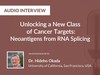
Hideho Okada is Professor of Neurological Surgery, Surgery and Immunology at the University of California, San Francisco (UCSF), where he holds the Kathleen M. Plant Distinguished Professorship and directs the Brain Tumor Immunotherapy Center. A physician-scientist, Dr. Okada has spent more than 25 years advancing immunotherapy for malignant brain tumors, pioneering glioma vaccines, T-cell–based therapies, and novel CAR T-cell approaches. His research has translated fundamental discoveries in tumor immunology into multiple FDA-approved investigational clinical trials aimed at improving outcomes for patients with glioblastoma and other brain tumors.
Talk Citation
Okada, H. (2026, August 31). Unlocking a new class of cancer targets: neoantigens from RNA splicing [Audio file]. In The Biomedical & Life Sciences Collection, Henry Stewart Talks. Retrieved September 21, 2026, from https://doi.org/10.69645/GFSP3600.Export Citation (RIS)
Publication History
- Published on August 31, 2026
Financial Disclosures
- Dr. Hideho Okada has not informed HSTalks of any commercial/financial relationship that it is appropriate to disclose.
Audio Interview
Unlocking a new class of cancer targets: neoantigens from RNA splicing
Published on August 31, 2026
8 min
A selection of talks on Oncology
Transcript
Please wait while the transcript is being prepared...
0:00
Interviewer: With us
today is Prof. Hideho Okada
from the University of
California, San Francisco,
who led a study that was
recently published in Nature,
identifying a new class
of public neoantigens
that are widely shared
across tumor types,
even those with low
mutation burdens.
Hideho, thank you so much
for joining us today.
Dr. Okada: Hi, Eyal. Thank you
so much for this opportunity.
Interviewer: To
kick things off,
could you briefly explain
what neoantigens are
and what makes them so promising
in the context of
cancer immunotherapy?
Dr. Okada: To answer that
question, let me start with
my background of my
research interests.
I have been dedicated
to the development of
immunotherapy for brain
cancer for a few decades.
When I started my work on
brain tumor immunotherapy
about 30 years ago,
not as many people
as you may see now
believed in cancer
immunotherapy.
Among those people who
believed in cancer
immunotherapy at that time,
not many of them
would believe in
immunotherapy for brain tumors,
particularly because the brain
and the central
nervous system (CNS)
were considered
immunologically privileged.
However, there are
autoimmune conditions
in the brain and the CNS,
for example, most models of
brain autoimmune conditions,
experimental allergic
encephalitis,
can be induced by
peripheral immunization of
normal mice with peptides
derived from normal
brain proteins.
So it is possible to induce
immune responses against
cells in the brain.
Based on these findings,
one of my essential
questions and interests
has been to explore