We noted you are experiencing viewing problems
-
Check with your IT department that JWPlatform, JWPlayer and Amazon AWS & CloudFront are not being blocked by your network. The relevant domains are *.jwplatform.com, *.jwpsrv.com, *.jwpcdn.com, jwpltx.com, jwpsrv.a.ssl.fastly.net, *.amazonaws.com and *.cloudfront.net. The relevant ports are 80 and 443.
-
Check the following talk links to see which ones work correctly:
Auto Mode
HTTP Progressive Download Send us your results from the above test links at access@hstalks.com and we will contact you with further advice on troubleshooting your viewing problems. -
No luck yet? More tips for troubleshooting viewing issues
-
Contact HST Support access@hstalks.com
-
Please review our troubleshooting guide for tips and advice on resolving your viewing problems.
-
For additional help, please don't hesitate to contact HST support access@hstalks.com
We hope you have enjoyed this limited-length demo
This is a limited length demo talk; you may
login or
review methods of
obtaining more access.
- Biochemistry
-
1. De novo designed proteins: a breakthrough in snakebite treatment
- Dr. Susana Vazquez Torres
- Cancer/Oncology
-
2. Advancing biological discovery through proteomics: from mass spectrometry to medicine- Prof. John Yates
-
3. From lab to clinic: bridging cancer genetics and public health
- Prof. Clare Turnbull
-
4. Engineered yeast: a breakthrough in targeted cancer therapies
- Prof. Gautam Dantas
-
6. Cancer vaccines
- Dr. Elias Sayour
-
7. The future of blood tests in cancer treatment
- Dr. Isaac Garcia-Murillas
-
9. Artificial intelligence in precision medicine
- Dr. Michael P. Menden
-
10. How liver X receptor regulates intestinal regeneration and tumor growth
- Dr. Srustidhar Das
- Immunology & Inflammation
-
11. Role of ETS2 in autoimmune and inflammatory diseases
- Dr. James Lee
-
12. Rheumatic diseases and musculoskeletal pain
- Prof. Anisur Rahman
-
14. Transmembrane domains and the regulation of trogocytosis in T cells
- Dr. Stefano Barbera
- Infectious Diseases/Microbiology
-
16. Kalihinol analog MED6-189: a promising pan-antimalarial candidate- Prof. Karine Le Roch
-
17. Elite controllers of HIV: from discovery to future therapies
- Prof. Bruce Walker
-
19. Towards developing a universal influenza vaccine
- Prof. Peter Palese
- Methods
-
21. The role of preregistration and registered reports in improving research transparency and reproducibility
- Dr. Peter Bonde Ernst-Rasmussen
-
22. Decoding aging: how a proteomic clock predicts mortality and disease across populations
- Dr. M. Austin Argentieri
-
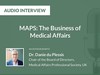
23. MassBank development and future
- Dr. Emma L. Schymanski
-
24. Synthetic whole embryo models and their applications
- Prof. Jacob (Yaqub) Hanna
-
25. Pioneering proteomics: insights on advancements in the science of proteins
- Prof. Ruedi Aebersold
- Neurology/Neuroscience
-
26. Rethinking the amyloid dogma in Alzheimer’s disease
- Prof. George Perry
-
27. Integrated multimodal cell atlas of Alzheimer’s disease
- Dr. Michael Hawrylycz
-
28. How and why neurons die in Alzheimer's disease?
- Prof. Bart De Strooper
-
29. Restoring glucose metabolism: a new approach to reversing cognitive decline in AD
- Prof. Katrin Andreasson
-
30. Advancing ALS genetics through accessible testing
- Dr. Teresa Fecteau
-
31. MicroRNA as a biomarker for early detection of amyotrophic lateral sclerosis
- Dr. Sandra Banack
- Dr. Paul Alan Cox
- Dr. Rachael Dunlop
-
32. Translational research in amyotrophic lateral sclerosis (ALS)
- Prof. Aaron D. Gitler
-
33. Muscarinic acetylcholine receptor modulation in neurological diseases
- Prof. Andrew B. Tobin
- Pharmaceutical Sciences
-
34. The state of the art in secondary pharmacology
- Dr. Jean-Pierre Valentin
-
35. The safety, toxicology, and regulation of antibody-drug conjugates
- Dr. Veysel Kayser
-
37. Management of generic drug development: challenges and opportunities
- Mr. Sandeep Patil
-
38. Translational medicine: the risk of failure in delay and how to reduce it
- Prof. Martin Wehling
-
39. Artificial intelligence in guiding cancer treatment decisions
- Prof. Eytan Ruppin
-
40. The regulation of cell therapy
- Prof. Moutih Rafei
-
41. Scale-up challenges in the production of nanomedicines from lab to industry
- Prof. Dr. Oya Tagit
-
42. Challenges and solutions of scaling up
- Dr. Shaukat Ali
-
44. Using real-world insights on drug interactions to inform drug development
- Dr. Amita Datta-Mannan
-
45. Role of marketing authorization holder in drug safety
- Dr. Raphael Elmadjian Pareschi
Topics Covered
- What is MassBank?
- Difficulties in the development and continuation of MassBank
- How the ensure quality of data
- Formatting and validation data
- Representing structural uncertainty
Biography
Dr. Emma Schymanski is a research scientist at Eawag, the Swiss Federal Institute for Aquatic Science and Technology. She develops suspect, non-target and unknown identification methods for environmental contaminants, primarily with LC-HRMS/MS. Contributing mass spectra to open spectral libraries is an essential part of this work and she is an active member of the MassBank consortium, developing RMassBank in a team.
Talk Citation
Schymanski, E.L. (2020, April 21). MassBank development and future [Audio file]. In The Biomedical & Life Sciences Collection, Henry Stewart Talks. Retrieved May 12, 2026, from https://doi.org/10.69645/LRLL3548.Export Citation (RIS)
Publication History
- Published on April 21, 2020
Financial Disclosures
- Dr. Emma L. Schymanski has not informed HSTalks of any commercial/financial relationship that it is appropriate to disclose.
A selection of talks on Methods
Transcript
Please wait while the transcript is being prepared...
0:00
Interviewer: Dr. Emma Schymanski,
thank you very much for
taking the time to discuss MassBank,
perhaps let's start with a brief
description of MassBank and
your role in it.
Dr. Schymanski: MassBank
is an open spectral library,
it was designed originally for
the metabolomics field,
we have now taken it and extended it
a bit for the environmental field.
It's made up of spectra from all around
the world, we have contributors in several
different countries and we now have
three servers: the Japanese server (the
original), the European server which
I've been involved with since 2012 and
also recently an American server,
run by Oliver Finn and his group.
My main role in MassBank is to expand
this towards the environmental community,
to share the data between a lot of members
of what we call the NORMAN Network,
which is an environmental
community in Europe.
We can exchange our spectra and
our knowledge between our members and
also around the world so
people can improve the identification
of environmental contaminants.
At the same time we're also
developing tools for metabolomics,
and working with other
spectral libraries beyond
MassBank towards exchanging this
information around the world.
Interviewer: Excellent thank you.
What are the challenges in getting the
scientific community to contribute to this
database?
Are there any steps that are taken from
your end to encourage more contributions?
Dr. Schymanski: We've found
throughout the years that we've been
involved that there's a lot of resistance
to contributing, and this is actually for
many reasons.
Mostly, it's just time, people would
like to but they don't have time, so
some of the steps here are trying
to develop tools and methods for
people to be able to contribute their
data more quickly or in an easier way.
We've had mixed success with some
of the tools, we've developed
some great interfaces that are still
very complicated for people to use.