We noted you are experiencing viewing problems
-
Check with your IT department that JWPlatform, JWPlayer and Amazon AWS & CloudFront are not being blocked by your network. The relevant domains are *.jwplatform.com, *.jwpsrv.com, *.jwpcdn.com, jwpltx.com, jwpsrv.a.ssl.fastly.net, *.amazonaws.com and *.cloudfront.net. The relevant ports are 80 and 443.
-
Check the following talk links to see which ones work correctly:
Auto Mode
HTTP Progressive Download Send us your results from the above test links at access@hstalks.com and we will contact you with further advice on troubleshooting your viewing problems. -
No luck yet? More tips for troubleshooting viewing issues
-
Contact HST Support access@hstalks.com
-
Please review our troubleshooting guide for tips and advice on resolving your viewing problems.
-
For additional help, please don't hesitate to contact HST support access@hstalks.com
We hope you have enjoyed this limited-length demo
- Economics and Business
-
1. In search of a new paradigm for innovation, free markets, and regulation
- Prof. Daron Acemoglu
-
2. Uncertainty and continuity: preparing for long-term changes to the global economy
- Prof. Michael Spence
-
3. Weaponization, economic coercion, and interdependency- Prof. Carla Norrlöf
-
4. Investment and the AI bubble: risk, innovation, and productivity
- Prof. Carl-Benedikt Frey
-
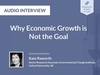
5. Why economic growth is not the goal
- Ms. Kate Raworth
-
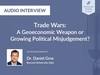
6. Trade wars: a geoeconomic weapon or growing political misjudgement?- Dr. Daniel Gros
-
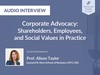
7. Corporate advocacy: shareholders, employees, and social values in practice- Prof. Alison Taylor
-
10. Capturing AI for business
- Mr. David C. Edelman
-
12. Why and how corporations should seek to expand to frontline regions
- Prof. Emerita Viva Bartkus
-
16. Greentech bubbles and investment in a green revolution
- Dr. William Janeway
-
17. Behavioral economics and business: revolution or reinforcing norms?
- Dr. Antara Haldar
-
18. China’s economic slowdown
- Prof. Yasheng Huang
-
20. Predictions and pandemics: why economies relapse before they recover
- Dr. Stephen Roach
-
21. India and the illusion of economic growth
- Prof. Ashoka Mody
-
22. Economic shocks: reflections on behavior, recovery, and the future
- Prof. Emeritus Koichi Hamada
-
24. How big data and genomics are personalizing your health
- Prof. Michael Snyder
-
25. Productivity and growth: facing the fiscal reality
- Prof. Michael Boskin
-
26. Stablecoins: illusions, claims, and facts
- Prof. Barry Eichengreen
-
27. State capitalism: regulating free markets in a liberal democracy
- Prof. Anna Grosman
-
28. How and why business should embrace effective altruism
- Prof. Peter Singer
-
29. The influence of climate change debate on banking policies
- Sir Howard Davies
-
30. Measuring impact: how and why companies can meet demand for responsibility
- Dr. Lisa Hehenberger
-
31. Minimum wage legislation: effects on levels of employment
- Prof. David Neumark
-
32. Avoiding a deep recession: how governments can plan for financial stability
- Dr. Willem H. Buiter
-
33. Cryptocurrencies: potential, risk, and regulation
- Prof. Anne Sibert
-
34. Inflation: lessons in forecasting and humility
- Prof. Jason Furman
-
36. Deep purpose: why pursue it, and how to implement it
- Prof. Ranjay Gulati
-
37. The green transition: a fundamental reconsideration of land rights and usage
- Dr. Giulio Boccaletti
-
38. Net Positive Manifesto: a business case for changing the world
- Mr. Andrew Winston
-
39. Duopolies in politics and business
- Ms. Katherine Gehl
-
40. The economics of healthcare
- Prof. David Cutler
-
41. Predictive analytics
- Dr. Eric Siegel
- Government and Society
-
45. The future of human progress, economic growth, and rising uncertainty
- Prof. Emeritus Angus Deaton
-
46. The steady-state economy
- Prof. Emeritus Herman Daly
-
47. Sustainable cities: planning, engagement, and implementation- Prof. Sylvie Albert
-
48. Artificial inequality: opportunities, harms, and social outcomes in the AI era- Prof. Bhaskar Chakravorti
-
49. Universal prosperity: investing for a plentiful future
- Mr. Chris Bradley
-
50. The US-Asia triangle: government, business, and values
- Prof. Joseph S. Nye Jr.
-
51. AI, governance, and law: how capitalism drives culture and innovation
- Prof. Katharina Pistor
-
52. Confronting neoliberalism: why government is critical to lasting prosperity
- Prof. J. Bradford DeLong
-
53. Cities: living and working in global business centers
- Prof. Edward Glaeser
-
55. Transparency and sustainability: increasing the impact of The World Bank
- Mr. Bertrand Badré
-
56. Moving beyond GDP: modernizing economic indicators
- Prof. Jayati Ghosh
-
57. Regulation, competition, and government Intervention
- Prof. Barry Schwartz
-
59. Globalization in the face of diminishing democracy
- Prof. Grzegorz W. Kolodko
-
60. The UK and EU: Trade, employment, and business after Brexit
- Prof. Anand Menon
-
63. Nuclear energy: a case for fear-defying sustainability
- Prof. Emeritus Joshua S. Goldstein
-
64. Balancing economic prudence and sustainability
- Prof. Emerita Deirdre McCloskey
-
65. Enacting social change on a major scale: the role of business
- Prof. Rebecca Henderson
-
66. The role of economics in setting government policy
- Mr. Sebastian Mallaby
-
67. The European energy crisis
- Dr. Anders Åslund
-
68. US and China: are there any winners in a trade war?
- Mr. Martin Wolf
-
69. Bureaucracy and innovation: the entrepreneurial state
- Prof. Rainer Kattel
-
71. Policy-making: global crises and the role of business
- Dr. Bill Emmott
-
72. Inflation in the shadow of debt: growth, regulations, and reforms
- Dr. John Cochrane
-
73. Why so negative? Impacts and implications of US media coverage
- Prof. Bruce Sacerdote
-
74. Sanctions: war and economic consequences
- Prof. Jeffrey Frankel
-
75. The democratic recession and its impact on business
- Prof. Larry Diamond
-
76. The purpose of public service broadcasting in a democracy
- Prof. Emeritus Patrick Barwise
-
77. Transformation and innovation: cities of the future
- Prof. Carlo Ratti
-
78. MAPS: the business of medical affairs
- Dr. Danie du Plessis
-
79. Translational medicine: the risk of failure in delay and how to reduce it
- Prof. Martin Wehling
- Organisations and Leadership
-
80. Why some leaders thrive and others derail
- Prof. Manfred F. R. Kets de Vries
-
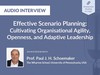
82. Effective scenario planning: cultivating organisational agility, openness, and adaptive leadership- Prof. Paul J. H. Schoemaker
-
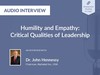
83. Humility and empathy: critical qualities of leadership
- Dr. John Hennessy
-
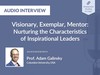
84. Visionary, exemplar, mentor: nurturing the characteristics of inspirational leaders- Prof. Adam Galinsky
-
89. Talent marketplaces: job architecture, productivity, and employee engagement
- Mr. Ravin Jesuthasan
-
93. Diversity in nonprofit boards
- Ms. Sophia Shaw
-
97. Nurturing the ability to ask impactful questions
- Prof. Robert Langer
-
98. Mentoring: creating meaning by sharing knowledge, values, and skills
- Dr. Deborah Heiser
-
99. Unity as a lever of Influence: how to create and maintain trust in business
- Dr. Robert Cialdini
-
100. Managing networks in the digital age
- Prof. Linda A. Hill
-
101. Going beyond teaching and learning: excellence in higher education
- Prof. Peter Wolstencroft
-
102. Selecting a board leader
- Prof. Michael Useem
-
103. Trust: how and why companies should be good places to come from
- Prof. Sandra J. Sucher
-
104. Where questions come from: developing the capacity to enquire
- Dr. Russ Roberts
-
105. The challenges and impact of investors: what directors should do
- Prof. Michael Useem
-
107. Encouraging corporate learning
- Mr. Brad Samargya
-
108. The strategy spine: how and why you should create one
- Prof. Rita McGrath
-
109. The talent marketplace: what it is, and why large companies need one
- Mr. Donncha Carroll
-
110. Having the best board possible
- Prof. Michael Useem
-
111. Machine learning, AI platforms, and biases
- Mr. Barry Libert
-
112. X-teams: why they succeed and how to nurture them
- Prof. Deborah Ancona
-
113. Online learning: strategies, budgets, and procurements
- Dr. Matt Bluem
-
114. How leaders can get out of the way of organizational change
- Mr. Ron Carucci
-
116. Project management: how to make projects more successful and the role of AI
- Mr. Antonio Nieto-Rodriguez
-
118. How Mumsnet is run
- Ms. Justine Roberts CBE
-
119. Fundamentals of being the trusted advisor
- Mr. Anthony Vardy
-
120. Collaborative innovation and the role of the innovation manager
- Prof. Jill Perry-Smith
-
122. Values that build prosperous businesses
- Dr. Mandeep Rai
-
124. 20-first: building gender balanced businesses
- Ms. Avivah Wittenberg-Cox
-
125. Moral and ethical practice in organizations
- Mr. Charles Wookey
-
126. SMART work: implementing better work design
- Prof. Sharon Parker
- Covid-19: Impact and Responses
-
128. Planning and response to COVID-19: lessons from China and South-East Asia
- Prof. Annelies Wilder-Smith
-
129. The impact of COVID-19 on higher education
- Dr. Wendy M. Purcell
-
130. The impact of Covid-19 on psychological safety in the workplace
- Prof. Amy C. Edmondson
-
131. The impact of Covid-19 on cybersecurity and data privacy
- Mr. Claudiu Popa
-
132. The impact of Covid-19 on organizations
- Prof. Paul J. H. Schoemaker
-
133. The impact of Covid-19 on tourism
- Mr. Robin Barker
-
134. Insolvencies in the era of COVID-19
- Dr. Keith Pond
-
135. Government response and economic impact during COVID-19
- Prof. James K. Galbraith
-
136. International aid for developing countries in the age of Covid-19
- Prof. Anne Krueger
-
137. The impact of COVID-19 on international trade
- Dr. Mona Chung
Topics Covered
- AI bubble
- Hierarchy and AI
- Research methodology
- Decentralization and innovation
- US politics
- China’s trajectory
- Tariffs
- Institutional experimentation
- AI and government policy
- Regulation vs. innovation
Biography
Carl-Benedikt Frey is the Dieter Schwarz Associate Professor of AI & Work at the Oxford Internet Institute and a Fellow of Mansfield College, University of Oxford. He also directs the Future of Work Programme at the Oxford Martin School, where he serves as Oxford Martin Citi Fellow.
After studying economics, history, and management at Lund University, Frey completed his PhD at the Max Planck Institute for Innovation and Competition in 2011 and went on to found Oxford’s programme on the Future of Work. He is an Economics Associate of Nuffield College and Senior Fellow at the Institute for New Economic Thinking at Oxford, and remains an Associate Fellow in Economic History at Lund University.
In 2013, he co-authored 'The Future of Employment: How Susceptible Are Jobs to Computerisation?' with Michael A. Osborne, estimating that 47 percent of jobs are exposed to automation. The study's methodology has been used by President Barack Obama's Council of Economic Advisors, the Bank of England, the World Bank, and the BBC's widely used automation-risk tool. In 2024, Frey and Osborne revisited their findings in light of generative AI, arguing that face-to-face communication and genuinely original creativity remain distinctly human advantages.
Frey is the author of How Progress Ends: Technology, Innovation, and the Fate of Nations (2025), which traces a thousand years of technological change and argues that progress depends on a delicate balance between decentralised innovation and bureaucracy for scaling. The book has been shortlisted for the 2025 Financial Times and Schroders Business Book of the Year Award and the 2026 Lionel Gelber Prize, and won the 2026 PROSE Award in Economics from the Association of American Publishers. He is also the author of The Technology Trap: Capital, Labor, and Power in the Age of Automation (2019), selected as a Financial Times Best Book of the Year and winner of the Richard A. Lester Prize.
Frey has served on the World Economic Forum's Global Future Council on the New Economic Agenda, the Bretton Woods Committee, and the Global Partnership on Artificial Intelligence (GPAI), an OECD-hosted initiative to guide the responsible development of AI. He has also advised international organisations, governments, and businesses, including the G20, the OECD, the European Commission, the United Nations, and several Fortune 500 companies. His work and commentary on technology, AI, and the future of work have appeared in The Economist (By Invitation), Financial Times, Foreign Affairs, the New York Times, Scientific American, and the Wall Street Journal, and have been featured in over a hundred media outlets worldwide, including CNN, BBC, and PBS NewsHour.
Links
Series:
Categories:
External Links
Talk Citation
Frey, C. (2026, July 30). Investment and the AI bubble: risk, innovation, and productivity [Audio file]. In The Business & Management Collection, Henry Stewart Talks. Retrieved August 19, 2026, from https://doi.org/10.69645/XWMA8846.Export Citation (RIS)
Publication History
- Published on July 30, 2026